



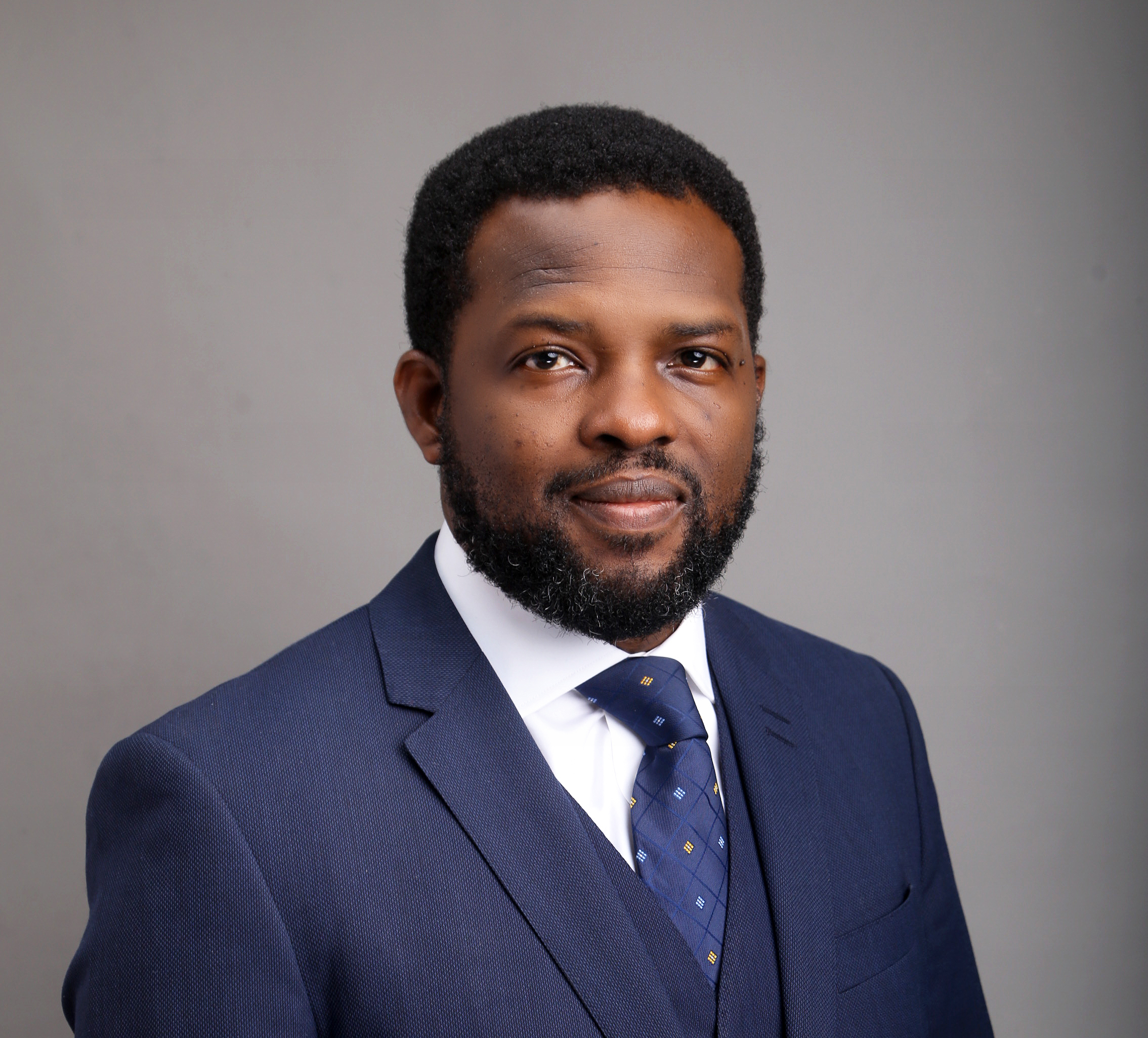
As the continent prepares for Omniverse Africa Summit 3.0 at the National Theatre in Lagos, co-convener Charles Emembolu opens up about breaking down silos between tech, research, and the creative economy to turn raw talent into regional prosperity.
There is a poignant moment that Charles Emembolu often remembers. It wasn’t a high-stakes keynote speech, a corporate boardroom meeting, or a dense public policy discussion. Instead, it was a quiet interaction with a young founder who approached him after an innovation event several years ago.

The founder wasn’t looking for funding, nor was he looking for a job. He wanted to say: “Thank you. I met someone today who changed how I think about my future.”
For Emembolu, that single interaction captures the essence of a journey spanning more than two decades across technology, entrepreneurship, education, and public policy. Today, his resume is formidable: CEO of Crestsage Limited, Co-Founder of TechQuest STEM Academy, Co-Founder of Roar Nigeria Hub, angel investor, and a fellow of multiple prestigious engineering and computer societies (FNSE, FNCS, FNIEEE).
Yet, as Co-Convener of the Omniverse Africa Summit, he insists his life’s work has never truly been about the tech itself. “It has always been about people,” he says. “Technology is simply one of the tools.”
Ahead of Omniverse Africa Summit 3.0, taking place from 2–5 June 2026 at the National Theatre, Lagos, ITPulse sat down with Charles Emembolu to discuss his journey, Africa’s innovation trajectory, and why he believes the continent’s next decade belongs entirely to those who can connect ideas, institutions, and people.
The Conversation
Many people know you through Omniverse Africa today. Where did the journey begin?
I started as a technology professional. Like many people of my generation, I was fascinated by systems, enterprise architecture, and how technology could help organizations become more effective. Over time, however, I noticed something interesting: the biggest problems were rarely technical. The challenges were usually human. You had researchers working in isolation, founders unable to access markets, universities disconnected from industry, and young people unable to find pathways to opportunity. Government and innovators were operating in completely separate worlds. The more I worked, the more I realized that progress only happens when people find each other. That realization shaped much of my career.
The question is no longer whether Africa has talent—we already know it does. The question is whether Africa can organize itself well enough to convert that raw talent into widespread prosperity
You delivered a TEDx talk titled The Education That Africa Needs. Looking back, do you still believe that message?
More than ever. The central idea was that Africa cannot build its future simply by importing solutions. We need educational systems that develop problem solvers—people who understand African realities but can compete globally, and who create opportunities rather than wait for them. When I look at Omniverse today, I realize it is really a continuation of that belief. Education, innovation, research, entrepreneurship, and creativity are all interconnected. The future belongs to societies that understand those connections.
One of your early achievements was helping establish Roar Nigeria Hub. Why was that important?
Because it challenged conventional thinking. When we launched Roar Nigeria Hub at the University of Nigeria, Nsukka in 2016, the concept of a university-embedded innovation hub was still relatively new in this part of the world. The idea was simple: What happens when students, researchers, startups, mentors, and industry partners operate within the same ecosystem? What happens when universities move beyond producing graduates and begin producing innovation, intellectual property, companies, and jobs? Roar Nigeria Hub went on to become the first full-fledged university-embedded technology hub in West Africa. That experience reinforced my belief that universities must play a central role in shaping our innovation future.
You are often described as an ecosystem builder. What does that mean to you?
It means building things that outlive projects. An event ends, a programme ends, a grant ends—but ecosystems continue creating value. Throughout my career, I have tried to contribute to platforms and standards that strengthen these communities. For instance, during my tenure as Chairman of the Innovation Support Network (ISN), Nigeria’s national association of innovation hubs, I chaired the development of Nigeria’s Innovation Hub Audit and Certification Framework. It was a pioneering initiative designed to establish standards, improve accountability, and support the long-term maturity of our space. For me, ecosystem building is ultimately about creating structures that enable other people to succeed.
An event ends, a programme ends, a grant ends—but ecosystems continue creating value. Ecosystem building is ultimately about creating structures that enable other people to succeed
How did Omniverse Africa emerge?
Out of frustration, honestly. I attended conferences around the world and noticed that everyone stayed within their own circles. Technology people met technology people, researchers met researchers, creatives met creatives, and investors met investors. Yet the future does not work that way. Artificial Intelligence affects education, healthcare, governance, and the creative economy all at once. Research requires commercialization; startups require policy support; creatives increasingly require technology. The future happens at the intersections. Omniverse Africa was created to become an “ecosystem of ecosystems” where those intersections could happen intentionally. In 2023, together with my friend and mentor Obi Asika—one of Africa’s most respected champions of talent and creativity—we decided to launch this platform. We debuted Omniverse Africa 1.0 in 2024 with a simple belief: Africa’s greatest opportunities emerge when you bring innovators, researchers, creatives, policymakers, investors, and young people into the same room to challenge assumptions and build together.
Did Omniverse become what you originally imagined?
No, it became much bigger. We originally imagined a technology and innovation platform, but what emerged was far broader. Researchers, universities, diplomats, development partners, corporate executives, and government leaders all showed up. The platform evolved into a place where entire disparate ecosystems could engage with one another. That was when we realized we were building something larger than just an annual event.
The numbers are becoming quite significant. What do they tell you?
They tell me the need is incredibly real. Since inception, Omniverse Africa has convened more than 30,000 participants, over 180 speakers, and more than 80 partner organizations. This year, for Summit 3.0, we expect participation from more than 30 countries with over 250 sessions spanning technology, research, policy, gaming, and future industries. In 2025, our Omniverse Career Center matched over 3,000 young people with jobs, and this year, the Omniverse Research Exchange alone attracted 430 applications from 31 countries. Those figures are encouraging, but attendance is not the measure that excites me most. Outcomes are.
What kind of outcomes?
A founder finding a customer. A researcher finding an industry partner to commercialize their work. A university establishing an international collaboration. An investor discovering a promising company, or a young person finding a mentor. Those moments may seem small individually, but they change lives. And when enough of those moments happen, they begin to fundamentally tilt entire economic ecosystems.
Why is Omniverse particularly relevant right now, in 2026?
Because Africa is entering a decisive decade. Artificial Intelligence is rapidly rewriting the nature of work, talent has become a borderless global asset, and the creative economy is turning into a major export industry. The question is no longer whether Africa has talent—we already know it does. The question is whether Africa can organize itself well enough to convert that raw talent into widespread prosperity. That is why Omniverse matters right now.
One of the strongest themes this year is research commercialization. Why the heavy focus there?
Because Africa is sitting on extraordinary intellectual capital. Researchers across the continent are working on brilliant solutions in healthcare, climate, agriculture, and AI. The challenge is not the research itself; the challenge is moving from publication to application—from discovery to deployment. The Omniverse Research Exchange was created to bridge that specific gap. By intentionally mixing researchers with investors and industry leaders, we increase the chances that great ideas become real-world solutions.
What role does the creative economy play in this vision?
A central one. Africa’s creative economy is one of its greatest success stories. Our music, film, fashion, and storytelling have completely transformed global perceptions of the continent. The next challenge is sustainability. How do we build stronger intellectual property systems? How do we attract institutional investment? How do we connect creativity with deep tech to create globally competitive creative enterprises? These are the exact conversations we are advancing through Omniverse and our work with the Council for Creative Technology Futures.
What has surprised you most about building this platform?
The sheer willingness of people to collaborate once the barriers are lowered. Every year I see investors writing cheques on the spot, ambassadors engaging early-stage startup founders, and students interacting directly with government ministers. Those conversations don’t happen naturally in day-to-day life, yet they happen seamlessly here.
What would success look like after the curtains fall on Omniverse Africa Summit 3.0?
Success is not what happens during the event; success is what happens six months later. It’s a startup entering a new regional market because of a connection made in Lagos. It’s a researcher securing their round of funding, or a young person successfully walking down a career pathway they didn’t even know existed before June. Those are the only outcomes that matter.
When people look back on your work twenty years from now, what do you hope they remember?
Not the titles, the events, or even the names of the organizations. I hope they remember that we helped people find each other. Most meaningful human progress starts right there—with one conversation, one introduction, one collaboration. If we can spark enough of those moments, the macro impact takes care of itself.
Finally, what message would you leave with Africa’s next generation of builders?
Do not wait for perfect conditions. Build with what you have right now. Stay curious, keep learning, actively seek collaboration, and never underestimate the power of relationships. Africa’s future will not be built by governments alone, nor by startups, researchers, or creatives acting independently. The future will be built at the intersections. That is what Omniverse Africa is ultimately about—creating those intersections at scale.