


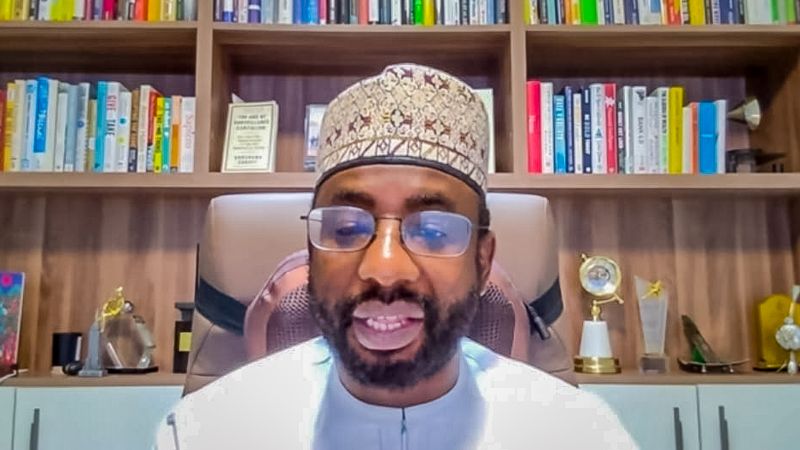
Nigeria is officially pivoting from being a passive consumer of foreign technology to a sovereign creator of it. This strategic shift was the core message from Kashifu Inuwa, Director General of the National Information Technology Development Agency (NITDA), during his recent address at the InnovateAI Conference in Lagos.
The move toward becoming an architect and builder of AI is driven by several critical factors, ranging from national security to cultural representation.
Here is why this transition is now a national priority:
Most global AI models are trained on datasets that lack adequate representation from Africa. Inuwa warned that this leads to significant bias against local dialects, cultures, and demographics. Nigeria aims to reinvest in infrastructure to retrain models using inclusive, local datasets that reflect the country’s unique context.
By building indigenous systems, Nigeria protects its “digital borders.” Relying solely on foreign hyperscalers risks leaving national data in the hands of external entities. Developing national AI infrastructure ensures that Nigeria owns the underlying logic and data governing its digital economy.
The government is moving away from “frozen laws” that become obsolete as technology advances. Through the Digital Economy and E-Governance Bill, Nigeria is adopting an iterative approach. This allows regulations to evolve alongside AI, ensuring that the legal framework supports innovation rather than stifling it.
Inuwa emphasized that simply using AI is not enough for a leading economy. To truly drive national development, Nigeria must understand and control the entire AI lifecycle, including:
- Responsible data collection.
- Model training and decision-making transparency.
- Continuous feedback and retraining.
While the goal is indigenous growth, Nigeria is not isolating itself. The Federal Government is seeking strategic partnerships with global tech giants and hyperscalers. However, the mandate is clear: these partners must align with Nigerian values and help build the physical and digital infrastructure required to develop models that work for Nigerians.
“Without understanding how AI models are trained… it will be difficult to build a responsible and trustworthy AI system,” Inuwa warned.
By co-designing these “guardrails” with the local tech ecosystem, Nigeria is positioning itself as a proactive leader in the global AI race, ensuring the technology serves its people rather than the other way around.