



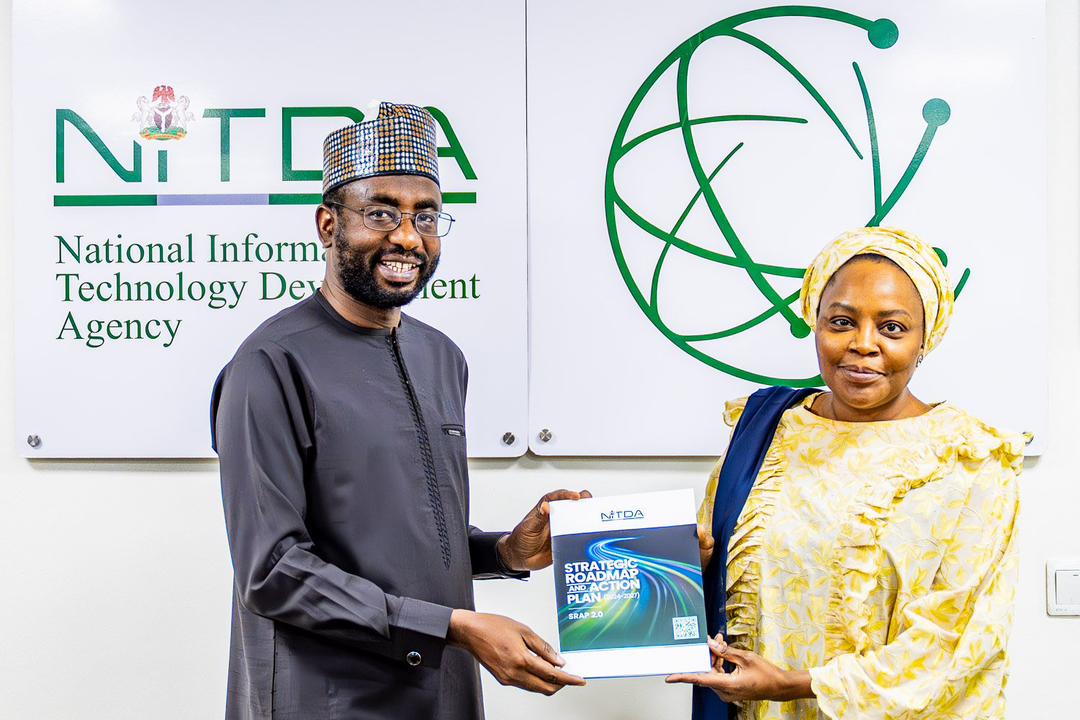
The National Information Technology Development Agency (NITDA) and the Universal Basic Education Commission (UBEC) have formalized a strategic partnership to accelerate digital literacy and bridge the technological gap within Nigeria’s basic education system.
During a courtesy visit by the UBEC management team to NITDA headquarters in Abuja, NITDA Director General Kashifu Inuwa and UBEC Executive Secretary Dr. Aisha Garba outlined a roadmap to transform how 47 million Nigerian children interact with technology.

Inuwa emphasized that this collaboration is a cornerstone of Nigeria’s national digital targets. While the training of teachers is already underway, the focus is shifting toward measurable impact on learners.
- The Target: Achieve 70% digital literacy by 2027 and 95% by 2030.
- The Strategy: Transitioning from “moving files” to managing AI systems, ensuring every student in the basic education bracket is reached.
- Data-Driven Progress: NITDA plans to use AI and data analytics to track exactly how many students each trained teacher impacts.
To support this vision, NITDA has already deployed over 1,500 digital learning centers nationwide. However, the partnership aims to optimize these facilities by sharing data between agencies to ensure resources aren’t duplicated, exploring new models to provide consistent internet access to rural and underserved schools and ensuring that centers currently underutilized are brought into full operation to serve their communities.
Dr. Aisha Garba highlighted the sheer scale of the mission, noting that with over 47 million children in the system, the stakes for Nigeria’s future are immense.
“Partnering with NITDA is a necessity for us. We need to use technology to bridge the lack of access and improve the quality of education,” Garba stated.
Beyond the classroom, NITDA is sharing its “Digital Transformation Playbook” with UBEC to support internal reforms and modernization. This initiative involves process re-engineering to reduce administrative bottlenecks and eliminate repetitive approval cycles. Additionally, the plan includes AI integration by training staff on Generative AI to enhance overall productivity rather than replacing human roles. Finally, the playbook focuses on foundational literacy by using technology to address enrollment gaps and quality concerns in states that are currently lagging behind.
By combining NITDA’s technical expertise with UBEC’s massive reach, the two agencies aim to move beyond one-off initiatives toward a sustainable, tech-driven educational ecosystem. As Inuwa noted, digital transformation is a journey where every reached target simply sets the stage for the next.