



As humanoid robotics capture the imagination of global investors, a critical structural reality is emerging behind the scenes: the entire automation revolution is tethered to a fragile rare-earth supply chain.
According to a market analysis released today by Tony Sage, CEO of Critical Metals, the success of the burgeoning robotics industry depends almost entirely on the availability of rare-earth permanent magnets.

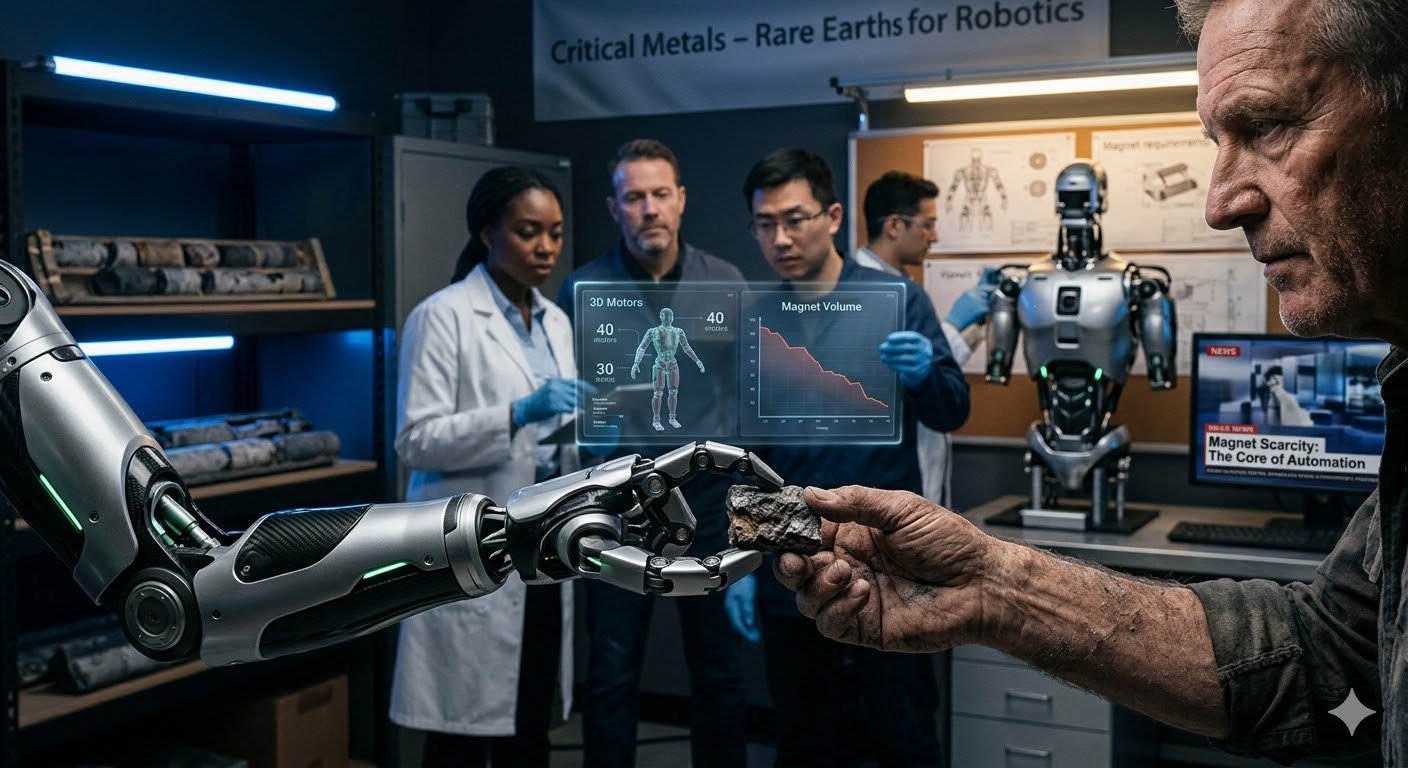
The demand for these materials is compounding at an unprecedented scale. Sage points out that over 95% of motors used in humanoid robots contain rare-earth magnets. With the average humanoid unit housing approximately 40 motors, the volume of magnets required scales rapidly as production moves toward mass adoption.
This surge in demand is hitting a market already stretched thin by other high-growth verticals. “Forecasts estimate that global rare earth magnet demand will increase rapidly, driven by electric vehicles, wind energy, and robotics,” Sage noted, identifying these as the primary drivers of future consumption.
At its core, the shift toward automation is less about software and more about mineral deposits. High-performance magnets require heavy rare earth elements, yet deposits capable of supplying these materials outside of Chinese jurisdiction remain incredibly scarce.
The current market concentration presents a significant strategic challenge for global tech firms. In 2025, China produced 90% of the world’s rare earth magnets, reflecting a massive production dominance. These same materials form the heart of every robot joint and actuator currently being developed.
For investors, the focus is shifting toward projects designed to break this monopoly. Sage argues that the scarcity of these elements is no longer a future risk but a present structural reality that must be addressed to sustain the robotics boom.
As the world watches the evolution of robot joints and actuators, the real story is unfolding in the mines and processing plants capable of feeding the automation hunger.