



Facebook Twitter LinkedIn RSS
    Trending
    • WAPF 2026: Why financial institutions are West Africa’s next big peering opportunity – IXPN
    • Innovation without accountability is just experimentation, by Emelia Sunday-Edet
    • NCC partners KPMG to review 2018 telecom interconnection rates
    • Ibiyode: How carbon market can become Nigeria’s next multi-billion-dollar job engine
    • From bootcamp to business: Anambra’s SID graduates 400 engineers, disburses ₦80m to 80 startups in Awka
    • Universities must begin to produce deep thinkers for AI age, Prof. Dzidonu urges
    • Why Nigerian engineers must stop waiting for global tech to notice Africa, by Oluwajuwon Omotayo
    • Is the era of the POS operator coming to an end? By Elvis Eromosele
    Facebook Twitter LinkedIn
    ITPulse.com.ngITPulse.com.ng
    • News
    • Interviews
    • Blogs
    • Analysis
    • Opinion
    • Videos
    • Press Releases
    • Pictures
    • Advertise
    ITPulse.com.ngITPulse.com.ng
    Home»News»Tony Sage warns of magnet scarcity as robotics revolution surges
    News 2 Mins Read

    Tony Sage warns of magnet scarcity as robotics revolution surges

    mmBy ITPulseMarch 25, 2026231 Views
    Facebook Twitter WhatsApp Pinterest LinkedIn Reddit Tumblr Email
    Share
    Facebook Twitter LinkedIn Pinterest Email

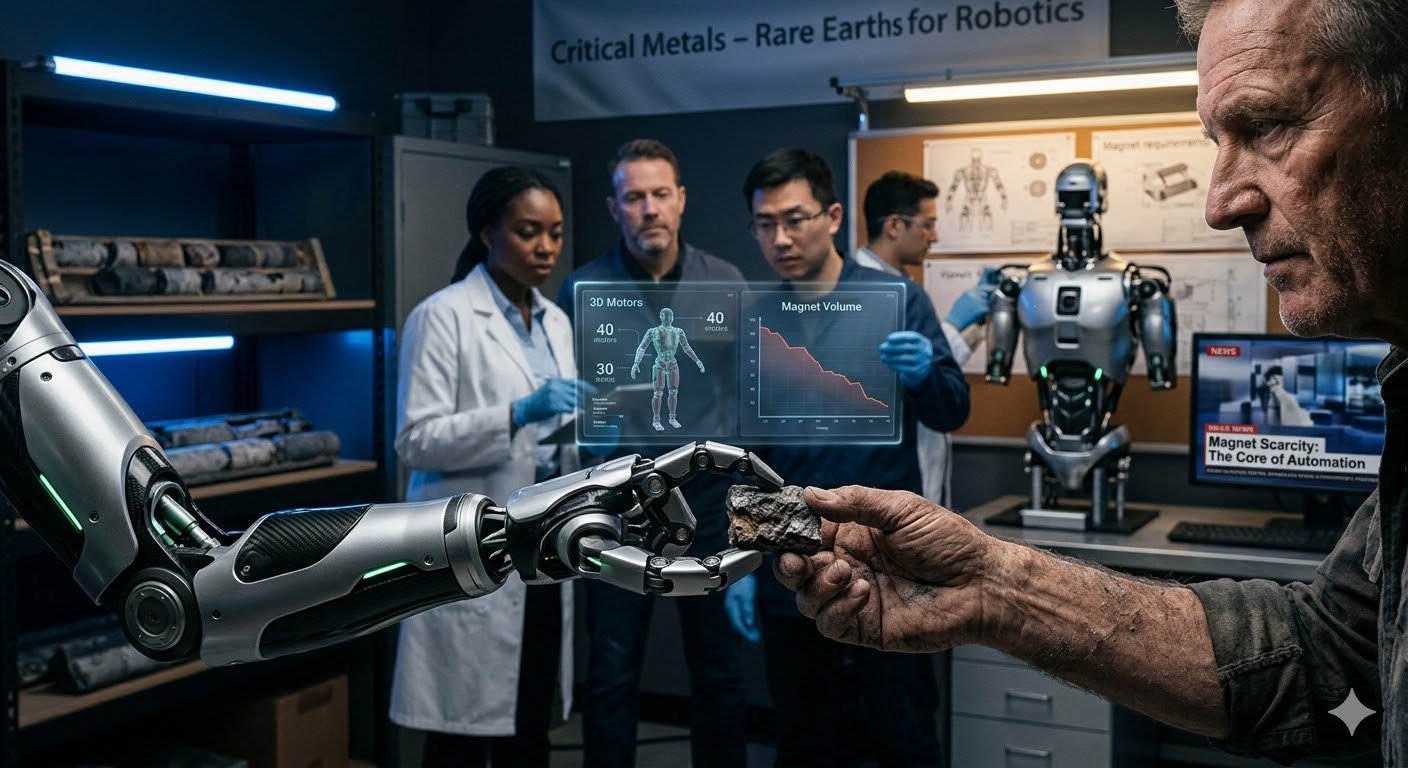
    As humanoid robotics capture the imagination of global investors, a critical structural reality is emerging behind the scenes: the entire automation revolution is tethered to a fragile rare-earth supply chain.

    According to a market analysis released today by Tony Sage, CEO of Critical Metals, the success of the burgeoning robotics industry depends almost entirely on the availability of rare-earth permanent magnets.

    The demand for these materials is compounding at an unprecedented scale. Sage points out that over 95% of motors used in humanoid robots contain rare-earth magnets. With the average humanoid unit housing approximately 40 motors, the volume of magnets required scales rapidly as production moves toward mass adoption.

    This surge in demand is hitting a market already stretched thin by other high-growth verticals. “Forecasts estimate that global rare earth magnet demand will increase rapidly, driven by electric vehicles, wind energy, and robotics,” Sage noted, identifying these as the primary drivers of future consumption.

    At its core, the shift toward automation is less about software and more about mineral deposits. High-performance magnets require heavy rare earth elements, yet deposits capable of supplying these materials outside of Chinese jurisdiction remain incredibly scarce.

    The current market concentration presents a significant strategic challenge for global tech firms. In 2025, China produced 90% of the world’s rare earth magnets, reflecting a massive production dominance. These same materials form the heart of every robot joint and actuator currently being developed.

    For investors, the focus is shifting toward projects designed to break this monopoly. Sage argues that the scarcity of these elements is no longer a future risk but a present structural reality that must be addressed to sustain the robotics boom.

    As the world watches the evolution of robot joints and actuators, the real story is unfolding in the mines and processing plants capable of feeding the automation hunger.

    magnet robotics revolution Tony Sage
    Share. Facebook Twitter Pinterest LinkedIn Tumblr Telegram Email
    mm
    ITPulse
    • Website
    • Facebook
    • Twitter
    • LinkedIn

    ITPulse is a wholly information technology communication (ICT) news website, with a special focus on the African continent. The website provides up-to-date biz-tech news, analysis and comprehensive and thorough insight into the continent's ICT terrain

    Related Posts

    WAPF 2026: Why financial institutions are West Africa’s next big peering opportunity – IXPN

    June 19, 2026

    NCC partners KPMG to review 2018 telecom interconnection rates

    June 18, 2026

    Ibiyode: How carbon market can become Nigeria’s next multi-billion-dollar job engine

    June 18, 2026

    Leave A Reply Cancel Reply

    Subscribe to Updates

    Get the latest creative news from FooBar about art, design and business.

    Latest Posts

    WAPF 2026: Why financial institutions are West Africa’s next big peering opportunity – IXPN

    June 19, 2026

    Innovation without accountability is just experimentation, by Emelia Sunday-Edet

    June 19, 2026

    NCC partners KPMG to review 2018 telecom interconnection rates

    June 18, 2026
    About
    About

    Itpulse.com.ng is a wholly information technology communication (ICT) news website, with special focus on the African continent. The website provides up-to-date biz-tech news, analysis and a comprehensive and thorough insight info the continent's ICT terrain.

    Contact us: editorial@itpulse.com.ng

    Facebook Twitter LinkedIn RSS
    Latest Posts

    WAPF 2026: Why financial institutions are West Africa’s next big peering opportunity – IXPN

    June 19, 2026

    Innovation without accountability is just experimentation, by Emelia Sunday-Edet

    June 19, 2026

    NCC partners KPMG to review 2018 telecom interconnection rates

    June 18, 2026
    Popular Posts

    The localization trap: Why fintech products that change surfaces but don’t change payment infrastructure don’t work in African and European markets

    August 14, 2025

    WAPF 2026: Why financial institutions are West Africa’s next big peering opportunity – IXPN

    June 19, 2026

    NCC partners KPMG to review 2018 telecom interconnection rates

    June 18, 2026
    © 2017 - 2026 Itpulse.
    • Terms & Conditions
    • Privacy Policy
    • Advertise
    • Contact Us

    Type above and press Enter to search. Press Esc to cancel.