



By Ivy Samuel
Nigeria has built a digital economy where the customer is still doing too much of the connecting.

A typical user may book a ride on one platform, make a payment through another, order food somewhere else, send a transfer manually and still have to share a screenshot or call to confirm that the transaction went through. These behaviours have become so normal that the deeper problem is easy to miss users are often acting as the bridge between digital services that should already be able to work together.
Over the past decade, Nigeria has made major progress in taking everyday activities online. Payments, mobility, food delivery, logistics and commerce have all moved onto smartphones, but much of that progress has happened in separate systems. We solved access before we solved coordination.
That is where the next opportunity lies.
Every repeated verification, copied account number, failed payment and follow-up message represents friction that technology has pushed back onto the customer. In many ways, Nigerians have become the human APIs connecting the country’s digital economy.
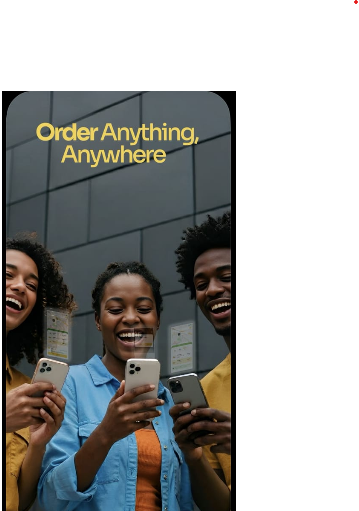
GoApp, developed by Adioo Technology and formerly known as GoCaby, is attempting to change that by bringing transport, logistics, food, commerce and payments into one connected environment.
“We were not trying to build another app in an already crowded space,” the company said. “The focus was on removing the friction between the services people already depend on.”
The important distinction is that GoApp is not simply placing several services inside one application. Its proposition is built around shared systems underneath those services, particularly payments.
At the centre is GoPay, the platform’s payment engine. During a major stage of its development, Senior Software Developer Eferhire Ugbotu worked on rebuilding the architecture around a common wallet and payment interface capable of supporting transactions across several categories.
“The challenge was not just scaling transactions,” Adioo said. “It was building a system that could remain stable and reliable even when the infrastructure around it was not.”
That challenge reflects the reality of building technology in Nigeria, where products often depend on payment processors, banks, telecom networks and other third parties that may not always perform consistently. GoApp responded with payment failover, load balancing and circuit-breaker mechanisms designed to keep transactions moving when individual providers became unstable, supporting reported uptime beyond 90 percent.
The commercial results show why reducing this friction matters. Improved transaction flows and recurring billing contributed to a 22 percent increase in the platform’s stickiness ratio, while a one-tap asynchronous payment system reduced transaction abandonment by 18 percent. Split payments contributed to a 15 percent rise in organic user acquisition, while loyalty and cashback features were linked to a 30 percent increase in retention.
Monthly Gross Merchandise Value exceeding £300,000, equivalent to more than ₦230 million.
The bigger lesson goes beyond those numbers. When payments, transport and commerce share the same underlying system, improvements in one part of the customer journey can influence several others. A better payment experience can improve food orders, a shared wallet can make transport easier, and loyalty can encourage activity across multiple services.
This is where Nigeria’s consumer technology sector needs to think differently.
The industry often separates fintech, mobility, logistics and commerce into different categories, but consumers do not live that way. Someone heading home may need transport, food, airtime and a bill payment within the same hour. What matters to that person is not which industry each transaction belongs to, but whether the experience works.
GoApp is one attempt to solve that problem, but the wider lesson is more important. Nigeria has already proved that people will use digital services for payments, transport, commerce and everyday needs. The next challenge is making those services work together well enough that the customer no longer has to do the connecting.
The customer should not be the API. The system should.