



By Ivy Samuel
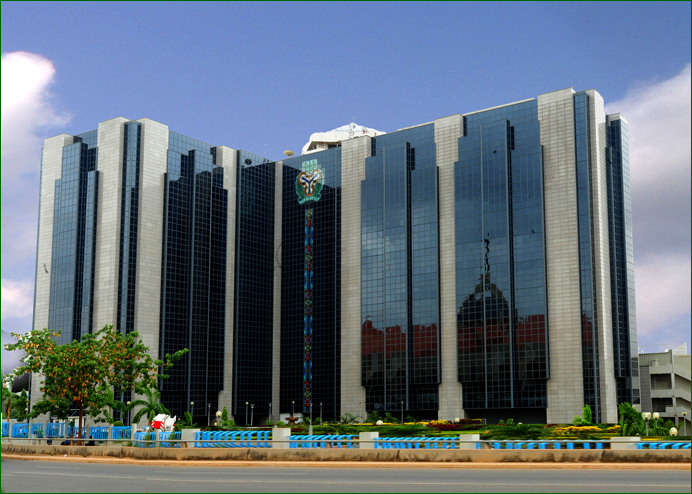
The Central Bank of Nigeria has officially reopened Open Market Operations (OMO) securities to individual and corporate investors, expanding the range of high-yielding fixed-income options available to domestic market participants.

Under a policy circular issued on August 12, 2026, individuals, companies, and non-bank financial institutions are now permitted to participate in both primary and secondary OMO markets through Deposit Money Banks.
The policy decision reverses a major restriction first implemented in 2019 and arrives during a period of heightened investor appetite for high-yielding, short-term debt instruments.
Open Market Operations serve as a core monetary tool used by the CBN to manage systemic liquidity. When the central bank determines that money supply is excessive, it issues OMO bills to absorb Naira from the financial system. While Treasury Bills are also short-term government instruments, OMO issues are specifically structured around liquidity sterilization goals, allowing the central bank to adjust issuance volumes based on its macroeconomic targets.
Despite their differing policy functions, OMO securities and Treasury Bills compete directly for short-term investor capital, with OMO currently delivering a notable yield premium. At the August 12, 2026 Treasury Bills auction, investors submitted approximately N4.4 trillion in bids against N700 billion on offer, with 91-day bills clearing at 16.30%, 182-day bills at 16.50%, and 364-day benchmark bills at 17.59%. Just one day later, an OMO auction attracted N4.93 trillion in demand against an initial offer of N600 billion. The CBN ultimately allotted N2.60 trillion, with 103-day OMO bills clearing at 20.39% and 138-day instruments at 20.01%, representing a 3.5 to 4 percentage-point premium over comparable Treasury Bills.
Financial analysts expect expanded market access to influence yield dynamics, though the final outcome will depend on central bank policy execution. Israel Adebomi, Head of Investment Banking at STL Capital & Advisory Limited, noted that stronger demand will not automatically drive yields lower because the CBN can choose to accept higher issuance volumes to match market interest. He explained that overall yields will primarily reflect the central bank’s liquidity stance, the volume supplied, and broader investor demand.
Similarly, Isaac Osaro, Head of Investment Research at First Securities Brokers Limited, indicated that increased liquidity competing for OMO paper could exert downward pressure on yields if issuance volumes remain capped, whereas sustained large-scale allotments to sterilize liquidity would keep rates elevated.
The return of retail and corporate investors to the OMO market introduces stronger competition for capital across domestic asset classes, though analysts do not anticipate a mass exit from the Nigerian Exchange. Osaro emphasized that fixed-income returns of 15% to 18% do not directly replace equities capable of delivering 30% to 50% in total annual returns, positioning OMO as a complementary portfolio option rather than a direct substitute.
However, the availability of near-20% yields on low-risk instruments effectively raises the benchmark return hurdle for equity investments. While fundamentally strong listed companies with robust earnings, solid dividends, and capital appreciation potential remain competitive, weaker or richly valued stocks face greater scrutiny from investors evaluating equity risk against fixed-income yields.