



By Martin Ekpeke
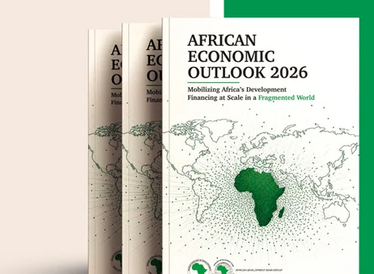
African nations could unlock up to $1.43 trillion annually by implementing comprehensive economic reforms, according to the 2026 African Economic Outlook report released Tuesday by the African Development Bank (AfDB) Group during its annual meetings in Brazzaville.

The report, themed Mobilizing Africa’s Development Financing at Scale in a Fragmented World, outlines a strategy to address the continent’s annual development financing deficit of more than $1.3 trillion required to meet the Sustainable Development Goals (SDGs).
According to the flagship report, the $1.43 trillion potential can be realized through stronger tax and non-tax revenue collection ($469 billion), improved public investment efficiency ($299 billion), curbing corruption and illicit financial flows, deepening capital markets, expanding public-private partnerships (PPPs), leveraging diaspora financing, and optimizing natural capital.
“The issue is not only about a lack of resources but also about effectively deploying capital,” the report noted, pointing out that every additional dollar of public investment in PPPs generates roughly $1.40 in private investment.
Despite institutional investors across Africa managing approximately $4 trillion in assets, including pension funds, insurers, and sovereign wealth funds less than 2.7 percent is currently allocated to local infrastructure and productive sectors.
To mobilize internal capital, the report calls for accelerating key structural reforms under the New African Financial Architecture for Development (NAFAD). Key measures include:
- Regional Integration: Expanding capital market activity beyond South Africa, Egypt, Nigeria, and Morocco, which currently dominate the continent’s $1.2 trillion stock market capitalization.
- Risk Assessment Reform: Utilizing the African Credit Rating Agency, launched in January 2026, to address perceived biases in sovereign risk assessments.
- Financial Stability: Deploying mechanisms like the African Financing Stability Mechanism to manage debt refinancing risks and ease liquidity constraints.
The report projects Africa’s average real GDP growth to moderate slightly to 4.2 percent in 2026, down from 4.4 percent in 2025, before rebounding to 4.4 percent in 2027. In 2025, 22 African economies posted growth rates above 5 percent, driven by improved macroeconomic policy, strong agricultural output, and solid commodity prices.
Regional growth forecasts for 2026 show varied trajectories across the continent:
- East Africa: Projected to lead the continent at 5.9 percent (down from 6.6 percent in 2025 due to elevated energy import costs), with an expected rebound to 6.4 percent in 2027.
- West Africa: Forecast at a stable 4.7 percent, supported by agriculture and infrastructure spending.
- North Africa: Expected to slow to 4.0 percent from 4.4 percent, impacted by weaker tourism demand and global supply chain bottlenecks.
- Central Africa: Projected to accelerate to 3.8 percent from 3.6 percent, buoyed by sustained oil prices.
- Southern Africa: Forecast to remain subdued at 2.1 percent due to weaker mining output and higher energy costs.
The AfDB warned of persistent downside risks, including average inflation remaining elevated at 10.4 percent in 2026, global supply chain disruptions, currency depreciations, and tightening external financing conditions.