



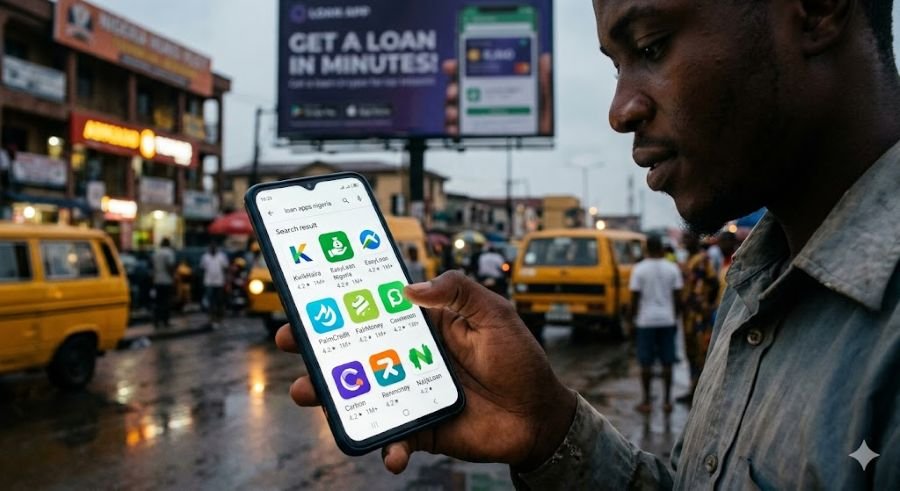
By Martin Ekpeke
Within minutes, you can download an app, input your details, and watch cash drop into your account. No collateral, no long lines, no judgmental glares from a loan officer. This is the case with digital lending platforms coming to the succour of an average Nigerian, in a country where traditional bank loans require everything short of your firstborn child.

Digital lending apps have become an absolute lifeline for many with a broken car, a sudden school fee deadline, or an unexpected medical bill.
But this ease of access has birthed a challenging and darker reality, with a massive rise in predatory, unlicensed, and fully fraudulent loan apps. These digital loan sharks do not just charge astronomical interest rates; they weaponize your personal data, engage in systemic character assassination, and, in some cases, disappear with your hard-earned money before ever disbursing a single kobo.
Though the Federal Competition and Consumer Protection Commission (FCCPC) has aggressively fought back, blacklisting dozens of apps and enforcing strict compliance guidelines, scammers and developers of these fake lending apps adapt overnight.
When these apps are removed from official app stores such as the Play Store and iOS, they simply move to WhatsApp groups, Telegram channels, and sketchy download links.
Here are four strategic steps to take and spot a fake digital lending app before it traps you. If you are looking for urgent financial relief, you cannot afford to skip your due diligence.
- The FCCPC register test
Regulatory approval is the clearest line in the sand, as every legitimate digital money lender in Nigeria must be registered and approved by the Federal Competition and Consumer Protection Commission. If an app is not on the government’s official registry, it is operating illegally. Before inputting a single piece of data, open your browser and check the verified list at FCCPC. If the app’s name isn’t explicitly cleared on that portal, you must close the app and uninstall it immediately.
- Excessive device permissions
When you install a loan app, it will request permissions, and you must pay close attention to what it wants to access. Legitimate lenders only need to verify your identity and assess basic risk metrics, meaning they do not need access to your entire personal life. If a loan app demands permission to access your entire contact list, SMS logs, or private photo gallery, you are looking at a trap. Predatory apps use your contact list as an aggressive debt-collection tool, and the moment a repayment is slightly delayed, they will blast defamatory text messages to your mother, your boss, and your church members to falsely label you a criminal.
- The upfront processing fee scam
This type of scam is a straightforward, old-school fraud dressed up in modern app code. It is a major red flag if the app approves your loan but insists that you must pay a processing fee, activation cost, or security deposit out of your own pocket before they can disburse the funds. As a rule, money should never leave your account before money enters it. Legitimate lenders always deduct their administrative fees directly from the disbursed loan amount. If an app asks you to send money first via a random transfer link or bank account, they are going to steal that deposit and ghost you.
- Ghost Channels and Sideloading
The distribution pipeline that shows how you found the app tells you almost everything you need to know about the legitimacy of the operator. It is a major red flag if you receive a direct link to download an Android Package (APK) file via a WhatsApp message, an SMS, or a shady Facebook ad because the app claims it is not on the Play Store right now. In reality, serious financial institutions do not distribute their software through random chat links. Furthermore, a real app will always have a functional, secure website, a verifiable physical office address, and responsive, official customer service channels rather than a generic Gmail address or a single floating WhatsApp number.
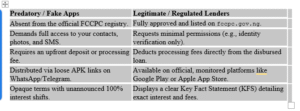
Red Flags vs. Safe Signs
To help keep your finances and your reputation secure, keep this checklist in mind before tapping “Apply”:
 Financial pressure makes us vulnerable, and scammers feast on urgency. But borrowing fast money should never cost you your peace of mind, your data privacy, or your personal dignity. Take five minutes to verify the lender. If the app feels pushy, evasive, or overly hungry for your phone’s personal data, trust your gut, hit uninstall, and walk away.