



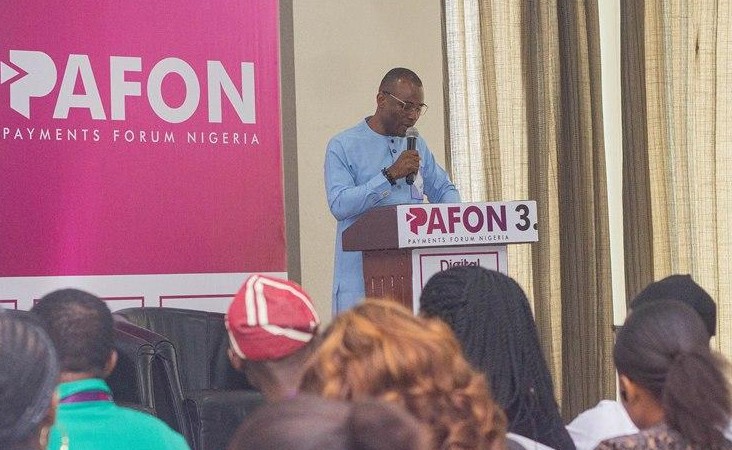
In a world where financial inclusion is often just a buzzword, Chika Nwosu, Managing Director of PalmPay, is pivoting the conversation toward something far more intimate: Embedded Finance.
Speaking at the third edition of the Payments Forum Nigeria (PAFON 3.0) recently, Nwosu delivered a vision for Africa’s digital economy that moves money away from bank branches and directly into the palms of traders, drivers, and shopkeepers.

The theme of the forum, “Embedded Finance in Africa: Powering Payments Where People Live, Work, and Trade,” served as a backdrop for Nwosu’s reality check on the continent’s progress.
He reminded the audience that as recently as 2017, nearly 60% of Sub-Saharan African adults were ghosted by the formal financial system. Even for those with accounts, the Nigerian experience was often defined by the frustration of network timeouts and the anxiety of failed transactions.
“The average Nigerian wants to synergize life, work, and business without friction. Embedded finance is the answer. It’s about integrating financial services directly into the platforms people already use and trust,” Nwosu said.
Nwosu’s strategy focuses on the backbone of the African economy, the informal sector. Small businesses drive 80% of employment and more than half of the GDP in Sub-Saharan Africa.
By leveraging Nigeria’s massive smartphone base, Nwosu argues that payments must become a “feature” of everyday activity rather than a separate chore. Whether on a ride-hailing app, at a local market stall, or through a POS terminal, the goal is to make the payment invisible.
Innovation is fragile without reliability. Nwosu highlighted that PalmPay’s rise is built on a reliability at scale infrastructure, boasting a 99.95% transaction success rate.
PalmPay has deployed a network of over 500,000 agents to provide last-mile service to the unbanked and bridge the gap between digital systems and human trust. The company utilizes AI-driven fraud prevention combined with human oversight to protect user funds. Additionally, PalmPay leverages AI to tailor financial experiences to individual needs through data personalization.
Despite the gains, Nwosu warned that the journey is far from over. To truly unlock the continent’s potential, he outlined three non-negotiable priorities: reliability at scale, deep integration and radical accessibility.
Success, Nwosu concluded, will be achieved when a trader in a remote market can transact with the same speed and confidence as a corporate executive in Lagos.
For PalmPay, the future isn’t just about making payments easier, it’s about making them so seamless that the user forgets they are making a payment at all. In the race to digitize Africa, Nwosu is betting that the winner won’t be the loudest app, but the most invisible one.