



The Nigerian Communications Commission (NCC) has revealed that over 5,000 fibre optic cuts occurred across the country in the first half of 2026 as a direct result of road construction, excavation, and related civil engineering works.
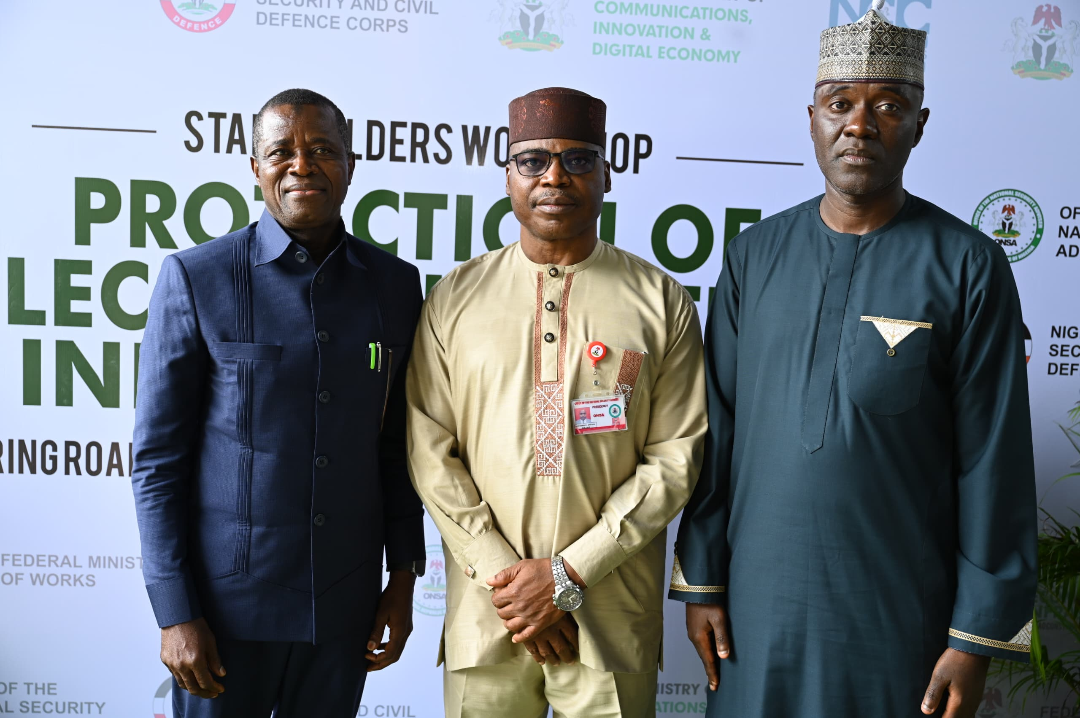
The Executive Vice Chairman and Chief Executive Officer (EVC/CEO) of the NCC, Dr. Aminu Maida, disclosed this on August 11, 2026, during a high-level stakeholders’ workshop on the protection of fibre-optic cables held at the National Counter-Terrorism Centre (NCTC), located within the Office of the National Security Adviser in Abuja.

Addressing attendees, Dr. Maida called on road construction companies, civil contractors, engineers, and relevant industry stakeholders to significantly strengthen inter-agency coordination and adopt stringent preventive measures to protect critical underground fibre-optic cables during road construction, rehabilitation, and utility works across Nigeria.
Detailing the magnitude of the issue, Dr. Maida noted that the more than 5,000 fibre-cut incidents recorded in the first six months of 2026 reflect a persistent systemic challenge. He recalled a major incident in February 2024 where severe fibre cuts triggered an almost network-wide outage for a major telecommunications operator, disconnecting millions of users for several hours and placing strain on adjacent networks.
He stressed that the nation’s push to expand physical infrastructure must not come at the expense of undermining the digital backbone connecting millions of Nigerians to essential services, commerce, and global opportunities.
According to the NCC boss, communications infrastructure has evolved into a vital national lifeline that underpins nearly every sector of the modern economy, including banking and electronic transactions, government services, education, healthcare, security operations, and emergency communications.
He warned that physical damage to fibre routes inflicts widespread disruptions and imposes heavy economic losses on citizens and businesses alike.
“To a machine operator on a construction site, it may appear to be one buried cable. To the nation, it can mean failed calls, stalled payments, interrupted services, and missed opportunities,” Maida stated, emphasizing the cascading impact of cable damage.
“Our central message is simple: Nigeria must build the roads that connect our communities while protecting the fibre networks that connect our economy. We need both forms of infrastructure, and we need them to work together.”
Maida clarified that the initiative is not aimed at assigning blame, acknowledging that road contractors do not deliberately attempt to disconnect communities, nor do telecom operators seek to obstruct road development. Instead, the focus is on establishing a reliable system of early-stage coordination before heavy machinery touches the ground.
To address the challenge, the Permanent Secretaries of the Federal Ministry of Works and the Federal Ministry of Communications, Innovation and Digital Economy previously inaugurated the Standing Committee on the Protection of Fibre Optic Cables to establish practical protocols before, during, and after road projects.
Furthermore, membership of the committee was recently expanded to include representatives from the Office of the National Security Adviser (ONSA), reflecting the national security dimensions of telecom safety. This aligns with the formal designation of telecommunications networks as Critical National Information Infrastructure (CNII)—a status requiring them to be protected under national law, with strict legal, regulatory, and financial consequences for willful or negligent damage.