



By Martin Ekpeke
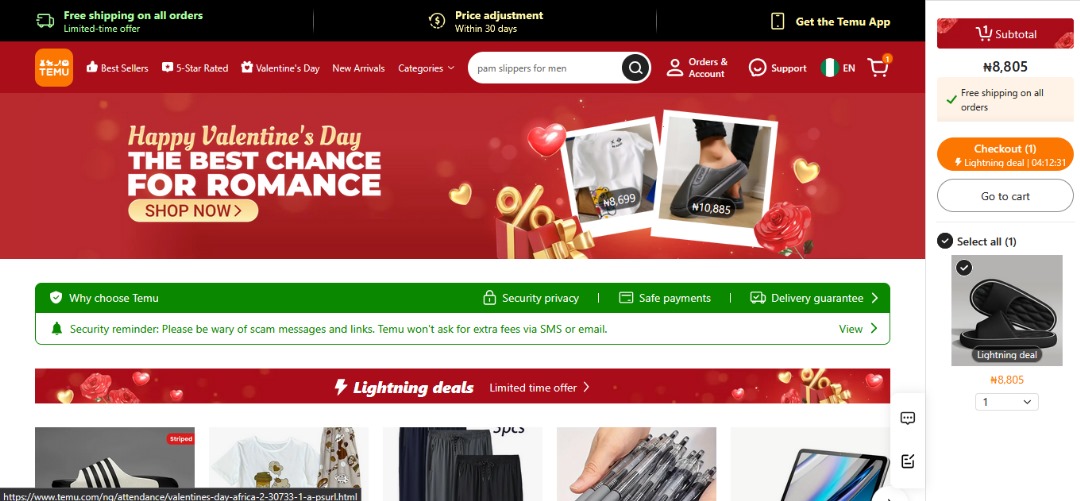
Temu, the direct-from-factory online marketplace, has marked its 100th day in Nigeria, boasting a rapidly expanding user base drawn to its promise of affordable, quality products.

Offering a diverse range of goods, from electronics to home essentials, Temu is tapping into Nigeria’s booming e-commerce market, empowering consumers to upgrade their lifestyles without breaking the bank. But how has the platform fared in its first 100 days, and what does the future hold?
The Good: Affordability and Accessibility
Temu’s success hinges on its disruptive direct-to-consumer model. By cutting out intermediaries, the platform offers significant savings, bringing prices closer to wholesale levels. This affordability has resonated strongly with Nigerian consumers, as evidenced by the platform’s rapid uptake.
Early adopters like Lagos-based digital creator and mother, Precious Ntuko (@redgrapescafe), have become vocal advocates, praising the platform’s value, ease of use, and wide selection. Ntuko’s positive experiences, shared with her followers, reflect a growing confidence in Temu’s offerings. This echoes similar success stories in other markets, like South Africa, where Temu has achieved impressive penetration rates.
A News24 survey revealed that a significant portion of South African users have not only tried the platform but have become active monthly users, with many estimating substantial savings on their shopping budgets. Favour Kolapo (@ShazzleInc), a civil engineer from Osun State, further reinforces this sentiment, highlighting the quality of products and ease of payment as key advantages. She even acts as a “batch shopper” for others in her state, testament to the trust she places in the platform.
The Bad: Navigating a Nascent Market
While Temu’s initial reception has been overwhelmingly positive, challenges remain. As with any new entrant into a dynamic market, building trust and ensuring consistent quality control are crucial.
While Kolapo praises the product descriptions and dimensions, maintaining this level of transparency and accuracy across a vast product range will be essential for long-term success.
Shipping and delivery, while lauded by Kolapo, will need to maintain their efficiency as order volumes increase. Building a robust customer service infrastructure to address potential issues and complaints will also be vital. Furthermore, navigating the complexities of the Nigerian market, including logistics, payment systems, and varying levels of digital literacy, requires continuous adaptation and refinement of strategies.
The Ugly: Potential Pitfalls and Long-Term Sustainability
The long-term sustainability of Temu’s model raises some questions. While cutting out middlemen offers immediate cost savings, it also necessitates a complex supply chain management system. Maintaining consistent product quality and ethical sourcing practices across a global network of manufacturers will be a significant undertaking.
Concerns about potential labor practices and environmental impacts associated with fast fashion and ultra-low pricing models, which have plagued other similar platforms, must be addressed proactively. Furthermore, as Temu scales, it will need to navigate the evolving regulatory landscape in Nigeria and other markets where it operates. Competition within the burgeoning e-commerce sector is also fierce, and Temu will need to continue innovating and adapting to stay ahead of the curve.
The Future: Potential for Growth and Disruption
Despite these challenges, Temu’s first 100 days in Nigeria suggest a significant potential for growth. The platform’s focus on affordability and accessibility has resonated with consumers. As e-commerce continues to expand in Nigeria, Temu is well-positioned to capitalize on this growth.
Temu could become a major player in the Nigerian and broader African e-commerce landscape by addressing the potential pitfalls and focusing on long-term sustainability. The platform’s disruptive model has the potential to reshape the retail landscape, offering consumers greater choice and affordability. However, its ultimate success will depend on its ability to consistently deliver on its promise of quality and value while navigating the complexities of a rapidly evolving market.