



From an AI system that stops your OTP from getting lost in a failed network, to a credit engine built for traders who have never held a bank card, Nigeria’s four selections for Google’s most competitive accelerator cohort yet tell the story of where the country’s tech sector is heading. ITPulse’s Epiphanus Obia writes
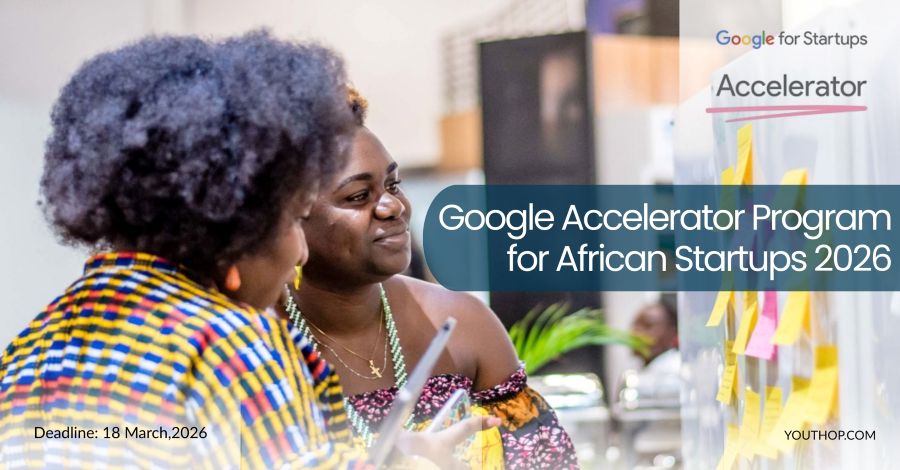
Nigeria is one of the nations that claimed the largest national share of the tenth cohort of Google for Startups Accelerator Africa, with four companies selected from nearly 2,600 applications submitted from across the continent. Bani, MasteryHive AI, Regxta, and Termii made the final list of 15, representing an acceptance rate of less than one per cent.

The announcement, made on 21 April 2026, marks a deliberate pivot in the programme’s direction: where earlier cohorts focused on broad digital transformation, this year’s selections are defined by deep-tech and AI-native solutions built to address Africa’s most persistent infrastructure failures.
The three-month hybrid programme runs from 13 April to 19 June 2026 and is equity-free, meaning participating startups give up no ownership stakes in exchange for mentorship, technical support, and access to Google’s global network. It is the first time since the programme launched in 2018 that a single country has sent four companies into a cohort of fifteen.
The scale of the competition places the outcome in context. Google received applications from founders across 17 African countries, and the 15 selected startups join a programme whose previous alumni have collectively raised more than $263 million and created over 2,800 jobs.
Folarin Aiyegbusi, Head of Startup Ecosystem for Sub-Saharan Africa at Google, described the selected founders as representatives of a broader continental momentum. “African startups are driving essential economic growth and social development,” he said in the programme announcement. “Our role is to serve as a supportive partner, providing these developers and founders with the technical infrastructure, mentorship, and global network they need to scale their solutions and amplify their real-world impact.” Each of the four Nigerian companies is building in the financial technology space, though their approaches and the specific problems they are trying to solve are different.
Termii — Making sure your OTP actually arrives
 Many Nigerians have experienced the frustration of waiting for a bank OTP that never comes, then the transaction times out, the payment fails, and the money stays stuck. Termii was built to stop that from happening. Founded in Lagos in 2014 by Emmanuel Gbolade, Ayomide Awe, and Atinuke Idowu, the company builds the communications infrastructure that banks, fintechs, and digital platforms rely on to deliver time-sensitive messages: login codes, fraud alerts, payment confirmations, and transaction pins.
In an unstable telecom environment like Nigeria’s, where network congestion, SIM failures, and routing errors are routine, those messages fail far more often than users realise, and each failure represents either a failed transaction or a security exposure. Termii’s AI system monitors delivery in real time, reroutes messages through alternative channels when primary routes fail, and effectively guarantees that the communication a financial institution sends will reach its customer.
The company currently processes more than three billion transactions and reaches over 16 million end-users through a client base of more than 20,000 businesses.
Termii graduated from Y Combinator in 2020 and has raised a total of $5.18 million across five funding rounds, including a $3.65 million Series A in June 2023 led by Ventures Platform. In 2025, the Financial Times ranked Termii the fastest-growing telecom company in Nigeria.
Gbolade described the Google accelerator as an opportunity to deepen the company’s AI roadmap and expand its global reach. “At Termii, we’re building AI-powered infrastructure that ensures financial transactions don’t fail — from login PINs to payment OTPs and fraud alerts,” he said. “Access to technical support and insights has been incredibly valuable even in the first week.”
Bani — Sending money across Africa in 15 minutes, not 15 days
 Anyone who has tried to pay a supplier in another African country knows the problem Bani is solving. A business owner in Lagos wanting to settle an invoice with a supplier in Accra, Nairobi, or Dakar typically faces a maze of correspondent banking relationships, unpredictable settlement timelines, unfavourable exchange rates, and fees that can eat into margins before the money even clears.
Bani, registered in Nigeria as Convey Dot Africa Limited, has built a payments infrastructure that routes those cross-border transactions through local currency rails and stablecoin networks, settling transfers in under 15 minutes. The platform supports more than 17 African currencies, including the naira, Ghanaian cedi, Kenyan shilling, and West African franc, and also facilitates payments to suppliers in Asia through the same single integration.
The company says its pricing saves businesses up to 25 per cent on cross-border transaction costs compared to using traditional banks, and it currently serves more than 200 businesses across sectors, including e-commerce, healthcare, travel, and fintech.
Bani’s focus on the reconciliation layer (giving businesses a clean, accurate record of exactly which transactions cleared, when, and at what rate) addresses a secondary but equally painful challenge: the accounting headache that follows when cross-border payments arrive with wrong reference codes or take days to appear in statements.
The Google accelerator represents an opportunity for Bani to deepen its AI capabilities for payment routing and fraud detection as it expands further across the continent.
MasteryHive AI — Closing the books in minutes, not days
 When a bank or fintech processes thousands or millions of transactions in a day, someone or something has to verify that every naira that left one account actually arrived in another, that the fees were correctly applied, and that nothing was manipulated along the way. In most Nigerian financial institutions today, that process is done largely through spreadsheets, manual matching, and teams of back-office staff who spend days reconciling records across multiple payment switches, bank statements, and card scheme reports.
MasteryHive AI replaces that process entirely. Its platform connects to an institution’s existing payment infrastructure and automatically matches transactions across sources: payment switches, settlement banks, card schemes, and agent networks, flagging exceptions for human review only when something genuinely does not add up.
The same platform also runs real-time fraud detection and anti-money laundering monitoring, screening transactions against sanctions lists, politically exposed persons databases, and adverse media sources simultaneously.
MasteryHive AI describes its system as “agentic AI” rather than a rules-based engine, meaning it adapts to new fraud patterns as they emerge rather than waiting for a compliance team to write a new rule. The company serves microfinance banks, commercial banks, payment fintechs, and reinsurers, offering the product on a subscription plus usage-based model priced in local currency. It’s selection for the
Google accelerator gives it access to the engineering expertise and cloud infrastructure needed to handle the transaction volumes of larger tier-one institutions, which represent its natural next market.
Regxta — Giving credit to people the bank never asked
 Regxta was born from a personal observation. Rukayat Kolawole, the company’s founder and chief executive, watched her mother run a micro-business and navigate a financial system that offered her almost nothing: no credit, no formal savings structure, no path to growth.
In 2021, Kolawole launched a precursor initiative called The Bells Dynamic Option to support entrepreneurs like her mother. That vision became Regxta: a Lagos-based fintech operating at the intersection of mobile technology, alternative credit data, and community-based agent networks, aimed squarely at the tens of millions of Nigerians who generate real economic activity but remain invisible to the formal financial sector.
The problem Regxta addresses is mostly structural. A market trader, roadside artisan, or smallholder farmer who has never applied for a bank loan has no credit history, not because they are a bad borrower, but because the system was never designed to observe them. Regxta’s AI-powered mobile app underwrites and disburses loans in real time to users with no borrowing history, drawing on alternative data signals rather than traditional credit records. Users can open accounts, save, access micro-pension and insurance products, and borrow through the platform. The app also includes a financial record generator, allowing micro-business owners to log income and expenses (many for the first time) and monitor their cash flows from a smartphone.
Meanwhile, the company’s agent network is central to its reach. Regxta trains community agents (local individuals who become what the company calls “champions” in their neighbourhoods) to onboard customers, help them register businesses, and guide them through processes that might otherwise exclude people who are not digitally literate or do not have reliable internet access.
The model also reaches customers through both a USSD code and the mobile app, meaning it does not require a smartphone to access basic services. To date, Regxta has onboarded more than 300 agents, served over 15,000 customers, and processed more than $3.5 million in loans across four Nigerian states. The company has paid out over $200,000 in agent commissions in the current year alone, making the agent network a meaningful income stream for community intermediaries as well as a distribution channel for Regxta.
The leadership team, which includes Moses Obika as Chief Technology Officer, Afis Bello as Chief Operating Officer, and Henry Ozoani as Deputy CTO, brings what the company describes as over 25 years of combined experience in banking and fintech.
Regxta’s partners include Providus Bank, ARM, and identity verification platform Identity Pass, with the company explicitly aligning its work to six United Nations Sustainable Development Goals covering poverty reduction, food security, health, education, economic growth, and gender equity. Kolawole has been direct about the gendered dimension of financial exclusion: “Women remain central to our mission because of their dedication to family and community development,” she has said.
The Google accelerator is expected to help Regxta scale its AI credit-scoring engine and expand its agent footprint beyond its current four states into new geographies across Nigeria and, eventually, the wider African market.
Nigeria’s four selections place the country and Kenya at the top of the list as the countries with the largest national representation in the cohort. The concentration of Nigerian startups in financial infrastructure (all four companies are building in fintech or adjacent to it) reflects both the depth of the country’s payments ecosystem and the scale of its remaining gaps.
Africa’s venture capital market attracted $3.9 billion in 2025, but Google’s accelerator leadership noted that scaling deep-tech businesses still requires infrastructure, cloud resources, and mentorship that most early-stage African founders cannot access alone. The programme’s equity-free structure means all four Nigerian companies will emerge from June 2026 with whatever they have built intact, no dilution, no board seats surrendered, only the tools to grow faster.
.