


Despite a challenging economic environment, Nigerian startups secured approximately $410 million in funding in 2024, underscoring the resilience and growth potential of the nation’s tech ecosystem.
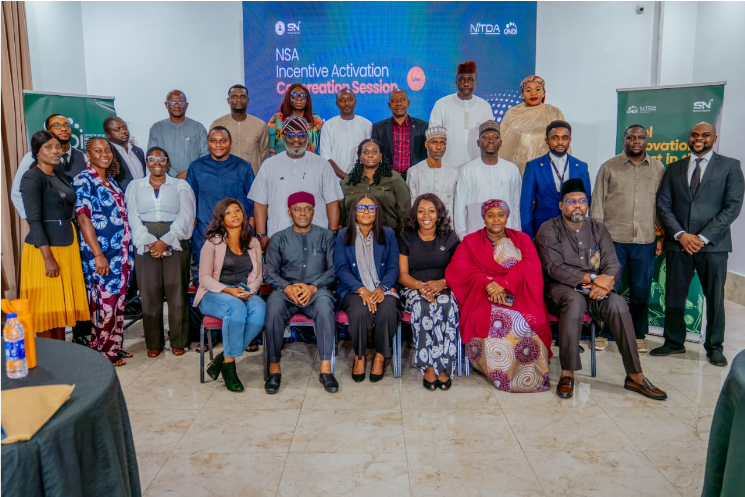
The figure was disclosed by Ms. Elma Andah, Acting Lead, Strategy, Research and Analytics at the Office for Nigerian Digital Innovation (ONDI), during a context-setting presentation titled “Operationalising the Incentive Provisions of the Nigerian Startup Act.”

Speaking on the landscape of local innovation, Andah noted that Nigeria’s startup ecosystem continues to demonstrate significant potential, currently boasting over 3,000 startups alongside several globally recognized technology companies.
Detailing the structural mechanisms designed to sustain this momentum, Andah highlighted that the Nigerian Startup Act (NSA), signed into law on October 19, 2022 provides more than 31 incentives distributed across six major operational categories.
The categories, according to her include tax and fiscal incentives, regulatory support, funding access, exports and trade, ecosystem enablers and training and capacity building.
The primary objective of the legislation, she explained, is to promote innovation, expand funding access, strengthen multi-stakeholder collaboration, and position Nigeria as Africa’s leading technology and innovation-driven economy.
Andah emphasized that effective execution of the Startup Act’s provisions hinges on active participation from across the public sector, involving more than 15 government institutions.
“No single institution can deliver all these incentives alone. Implementation requires coordination across more than 15 MDAs,” she said.
Illustrating the interconnected nature of these provisions, Andah pointed out that a single startup seeking capital might simultaneously require tax incentives, while an enterprise expanding into export markets would need regulatory clearances. Similarly, investors seeking tax credits rely directly on the operational efficiency of the startup labeling system.
Highlighting recent progress made under the Act, Andah cited several key milestones, including broader state-level engagement and adoption frameworks as well as the launch of the operational startup support portal. She also noted improved timelines for startup labeling and the establishment of the Startup Consultative governance framework. Additionally, she pointed to the rollout of the Startup Investment Seed Fund framework and ongoing efforts to operationalize the regulatory sandbox framework.
To build on these gains, Andah challenged participating Ministries, Departments, and Agencies (MDAs) to clearly establish ownership of their assigned incentives, simplify access procedures, strengthen inter-agency synergy, and implement robust monitoring and accountability mechanisms.
The presentation provided a platform for ecosystem stakeholders, investors, innovation hubs, and policymakers to identify existing implementation gaps and formulate actionable strategies. Stakeholders expressed optimism that a more coordinated rollout of the Nigerian Startup Act will significantly boost investor confidence and accelerate Nigeria’s broader economic development goals.