



By Epiphanus Obia
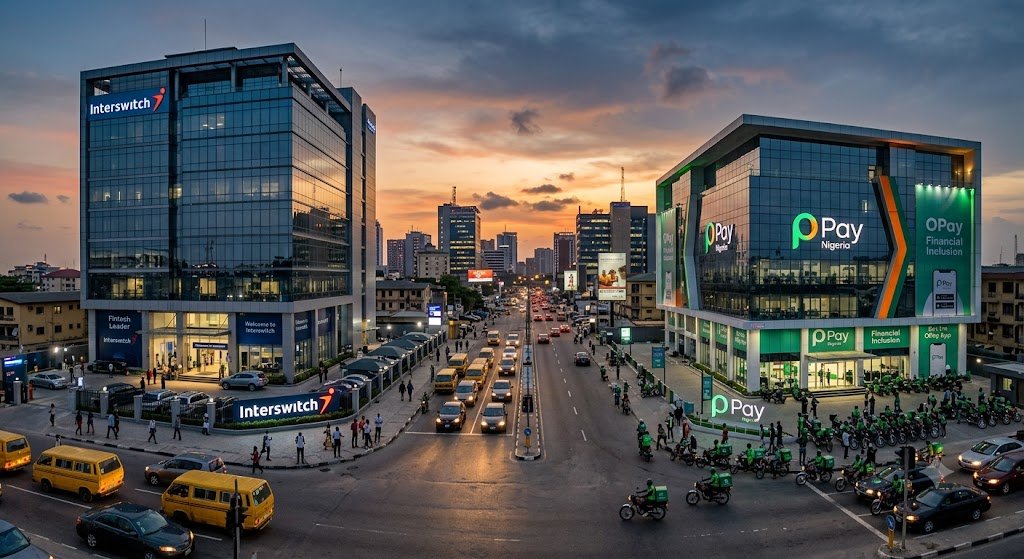
When you ask the average Nigerian to name the companies behind their bank transfers, their ATM withdrawals, or the OPay wallet on their phone, you will mostly hear two names: Interswitch and OPay. Between them, these two companies move billions of naira daily and carry a combined valuation north of $3 billion. What almost nobody mentions is the company that fathered both of them and then stepped quietly out of the frame.

That company is Telnet. Telnet Nigeria Limited has been operating for more than three decades, founded by the late Dr. Burian Carew on a simple, almost old-fashioned mission: democratising access to information technology across Nigeria and West Africa. Telnet basically built the technology infrastructure for banks, government agencies, and large corporations. Rather than focusing on consumer products, the company spent decades developing the digital systems that helped power Nigeria’s financial and telecommunications sectors. It is not a startup chasing headlines and has no unicorn valuation of its own, so it mostly remains invisible.
And yet, trace the origin story of Nigeria’s two most celebrated fintech unicorns, and the trail runs through the same office.
The birth of Interswitch
In the early 2000s, an electrical engineer named Mitchell Elegbe was working at Telnet, helping implement SWIFT, the messaging backbone banks use to talk to each other internationally. Nigeria at the time ran almost entirely on cash. ATM cards, where they existed, only worked at the bank that issued them. Elegbe pitched an idea: a “switch”, software that would let any bank’s card work at any bank’s machine. His boss at Telnet approved the project.
But the banks Telnet approached weren’t ready to buy switching software immediately. So in 2002, Elegbe left with his employer’s blessing to build the idea as its own company. With support from Accenture and early sponsorship from banks including GTBank, Interswitch was born, co-founded with Charles Ifedi.
Interswitch changed how Nigerians move money and transact. Interswitch pioneered the country’s first real-time electronic payment switch, then rolled out Quickteller, the Verve card scheme, and the POS terminal infrastructure that turned market stalls into digital payment points. In 2019, Visa invested $200 million in the company, pushing its valuation past $1 billion, making it Africa’s first fintech unicorn.
The bank meeting that became OPay
Telnet’s second act is less well-known and more direct. In 2007, the Central Bank of Nigeria went looking for partners to help drive financial inclusion at the grassroots, that is, reaching Nigerians who had never held a bank account. Telnet’s proposal was chosen. Out of that mandate came Paycom, a Telnet subsidiary that let ordinary people send money and buy airtime from a basic phone without having to visit and queue up at any bank branch.
About 10 years later, Opera, the Norwegian browser company, came into Africa looking for exactly that kind of infrastructure. Telnet’s leadership, by their own account, wasn’t interested in selling to just any buyer; they wanted one who understood the philosophy the company was built on, and they found it in Opera. The acquisition closed in 2017, and in August 2018, Paycom relaunched as OPay (its very name a fusion of “Opera” and “Paycom”). Most of OPay’s founding staff were pulled straight from Telnet’s own ranks.
OPay went on to become Africa’s biggest unicorn, hitting a $2 billion valuation on the back of investment from Chinese-backed venture funds, outpacing even the company that indirectly gave it its start.
Why the builder stayed in the shadows
Telnet’s fingerprints don’t stop at two companies. Business units including IPNX, Softworks Limited, and iTECO Nigeria have all spun out of their operations over the years, each carrying forward pieces of its engineering culture into telecoms, software, and IT services.
Part of the reason why Telnet is not well-known is its structure. Telnet has consistently played the role of builder and launchpad rather than owner—its founders have described a philosophy of “enlightened self-interest”, prioritising the survival and growth of what they built over retaining equity or control. Once Interswitch and Paycom could stand on their own, Telnet let them go, and with them went the public praise.
Part of it, too, is simply how tech mythology works. Founders who stay and scale become the face of the company; founders and companies that hand off the baton early get written out of the story. Mitchell Elegbe’s name is etched into Interswitch’s history, but Telnet’s name only comes up when you dig deeper.
The quiet infrastructure of a fintech boom
There is a broader story here about how Nigeria’s tech ecosystem actually grows, not always through venture capital and demo days, but sometimes through IT service firms that spend decades building institutional muscle, then let that muscle walk out the door to become something bigger. Telnet didn’t set out to build unicorns. It set out to get Central Bank contracts done and switch software working. The unicorns were what happened next.
Today, as Interswitch eyes a long-rumoured public listing and OPay expands its footprint across Africa, the company that gave both their first breath continues its work largely unnoticed – still licensed, still operating, still describing itself simply as a “digital transformation company”.
Nigeria’s fintech boom has plenty of celebrated founders. It could use a little more credit for its builders.